


There have been several injuries and even deaths at roller coasters recently, and you might be asking whether roller coasters are as safe as we once thought.
©Six Flags
CNN spoke with wellness expert Dr. Lena Wen to understand the potential health risks of roller coasters and what riders should know before getting on one. As an emergency physical and clinical associate professor at George Washington University and a former Baltimore health commissioner, she shared what you should know and whether roller coasters are truly safe.

Dr. Wen said, “Serious injuries on roller coasters are uncommon when taking into account the enormous number of rides taken every year. According to the International Association of Amusement Parks and Attractions, the chance of sustaining a serious injury on a ride at a fixed-site US amusement park is approximately one in 15.5 million rides.”

©Six Flags
She also explained that this statistic is somewhat limited because it includes all amusement park rides, not just roller coasters, and not every injury is reported. The data also comes from an industry-sponsored entity, and no independent national database captures every amusement park injury and death.

©EPR
The most relevant factor is that roller coasters expose riders to substantial physical forces, including G-forces, and injuries can occur from forces experienced during a ride, collisions, restraint problems, or other mechanical or operational incidents. Dr. Wen went on to say that while a direct blow to the head can cause traumatic brain injury, so can “rapid acceleration, deceleration, and changes in direction that lead to the head moving abruptly. The brain is suspended in fluid inside the skull, and sudden movement can cause the brain to shift relative to the surrounding structures.”

©Six Flags
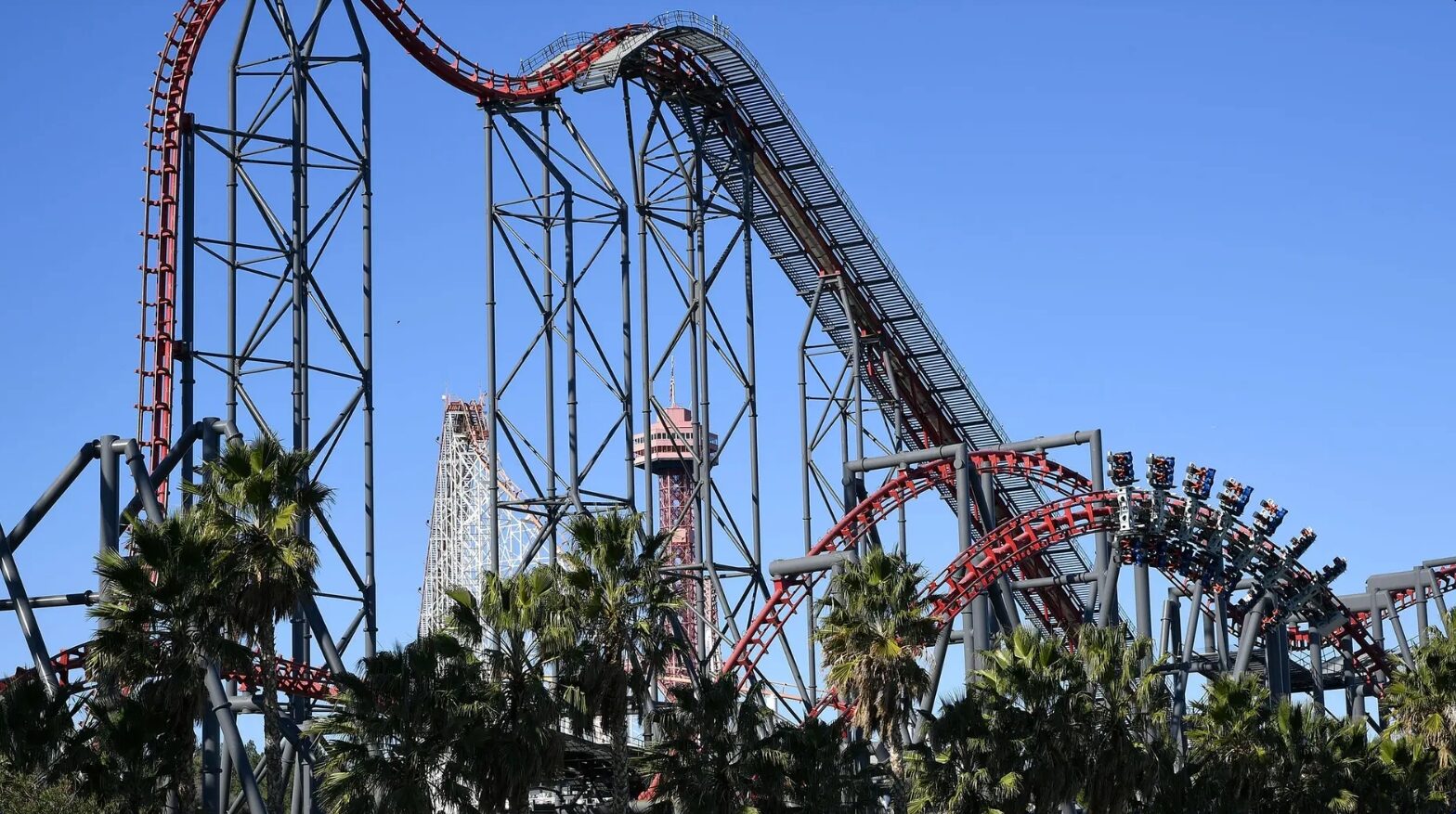
One injury called a subdural hematoma, which is bleeding between the brain and its outer protective covering, putting pressure on the brain, was sustained by several riders after riding the X2 roller coaster at Six Flags Magic Mountain. Two of them required emergency brain surgery.

©Six Flags
Dr. Wen recommended that anyone with certain medical conditions should be cautious about intense, high-speed rides. This includes significant neck or back problems, spinal instability, or recent orthopedic injuries. Someone recovering from surgery should also check with their doctors before riding. People with cardiovascular conditions and known brain aneurysms, prior strokes, or serious neurological conditions should also consult their doctors. People taking blood-thinning medications should also take additional precautions.

©Six Flags
In her final note, she said that “I think people should take into account the fact that millions of people enjoy amusement parks every year without sustaining injuries. The available statistics indicate that severe injuries are rare. At the same time, people should recognize that roller coasters, especially the ones involving high speeds and lots of sudden turns and twists, are not risk-free.”
What do you think? With all the recent injuries, are you going to avoid roller coasters? Tell us your thoughts in the comments and keep following DFB for more.
OVER 100 INJURIES REPORTED FROM POPULAR SIX FLAGS ROLLER COASTER
Join the DFB Newsletter to get all the breaking news right in your inbox! Click here to Subscribe!
WE KNOW DISNEY.
YOU CAN, TOO.
Oh boy, planning a Disney trip can be quite the adventure, and we totally get it! But fear not, dear friends, we compiled EVERYTHING you need (and the things to avoid!) to plan the ULTIMATE Disney vacation.
Whether you’re a rookie or a seasoned pro, our insider tips and tricks will have you exploring the parks like never before. So come along with us, and get planning your most magical vacation ever!